Snakes
Acts of the ApostlesSnakes are part of the Malta episode’s sharp reversal in how the islanders interpret Paul: after a viper fastens on his hand, they take it as evidence that he is a murderer receiving punishment, but when he survives, they conclude that he is a god. The episode uses the encounter to expose the limits of their theological assumptions and to raise questions about how people understand danger, justice, and the Realm.
The Viper and the Islanders’ Judgment
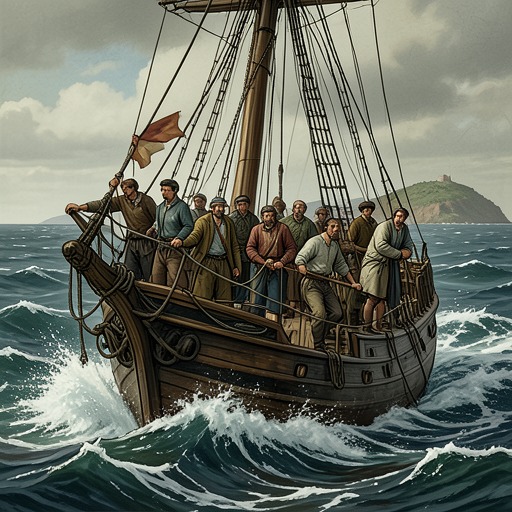
The travelers have reached Malta after the sea disaster. On a cold day, the islanders welcome the survivors, and a fire is built. As Paul gathers brushwood, a poisonous snake attaches itself to his hand. The islanders interpret the incident through an ancient assumption that wrongdoing is ultimately punished: because Paul has escaped death at sea, they reason that justice is now catching up with him and identify him as a murderer.
The narrative links their reasoning to the word “justice” in the surrounding account, which may refer to Dike, the goddess of justice. The snake thus becomes more than a physical danger in the episode: it is treated as a sign that seems to confirm the islanders’ moral explanation of Paul’s circumstances. Yet their interpretation does not hold. When Paul does not die, they move from one mistaken conclusion to another, deciding that he must be a god. Their reversal shows that witnessing an extraordinary event does not, by itself, provide a reliable theological framework for understanding it.
Religious Interpretation and Misreading
The episode’s account of the islanders is not simply a contrast between hospitality and hostility. They welcome the shipwreck survivors, but their assumptions lead them to misread what happens to Paul. Even after the viper incident overturns their initial judgment, they do not recognize the Realm; instead, they assign Paul divine status. The commentary presents this sequence as a reason witnesses may need to interpret events explicitly, helping people name what they see in terms of the Realm. Paul makes no such interpretive effort in this passage.
The story has also contributed, alongside a cited passage in Mark, to the practice of handling venomous snakes as a religious exercise. The commentary identifies this as a phenomenon for preachers to address, including the ritual’s significance and whether such practices are consistent with the purposes of the Realm. In this context, the snake’s role in the narrative should not be detached from the episode’s larger concern with how extraordinary events are interpreted.
Survival and the Realm’s Presence
Paul’s survival from the viper belongs to a broader pattern of preservation on Malta. The commentary connects it with his preservation from the storm and from the threat of being murdered during the shipwreck. Yet the episode also cautions against treating survival as a universal promise: snakes can attach themselves to people who cannot shake them off, and people can die. The story’s claim about divine preservation does not erase the reality of such danger or guarantee that every person will be spared.
The Malta narrative goes on to describe Paul healing Publius’s father and other islanders. Those healings are presented as manifestations of the Realm among gentiles, while the viper encounter marks the point at which the islanders’ expectations about Paul are overturned. Together, the events make Malta more than a stop on the way to Rome: it becomes a place where the Realm is revealed, even though the people who witness extraordinary events do not necessarily understand them correctly.